flash usdt, a comprehensive guide to the new method on ChainIDE
· based on the channel Rca FastPrint
Key takeaways
- Flash USDT is a method related to creating and testing USDT tokens via ChainIDE.
- ChainIDE provides an integrated development environment for smart contract coding and deployment.
- The method involves ERC20 token standards and interaction with MetaMask wallet.
- Testing and verification steps are crucial before using contracts with real funds.
- The video source emphasizes educational and development purposes only.
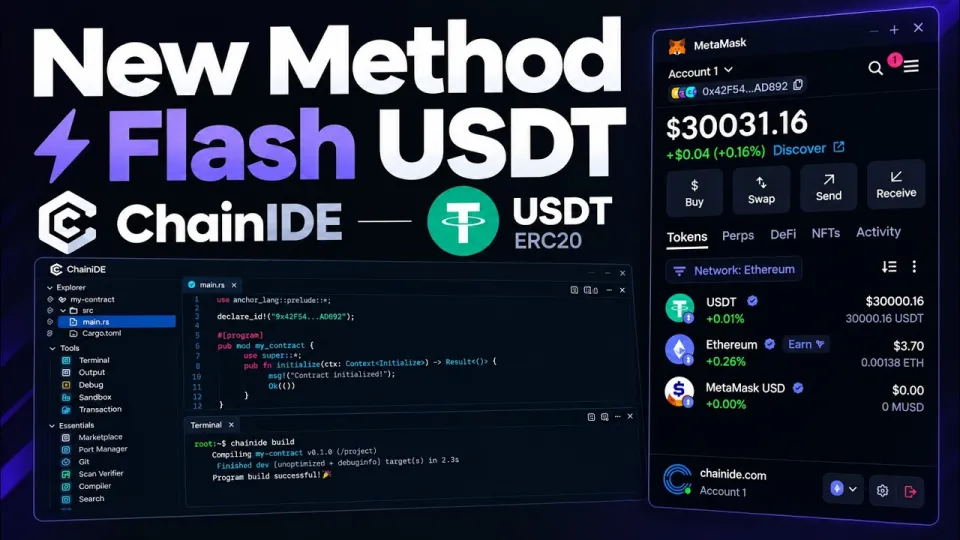
Video: Flash USDT | Found a NEW Method on ChainIDE
What is Flash USDT and Why It Matters
Flash USDT is a technique for creating and interacting with Tether (USDT) tokens on Ethereum-compatible blockchains, demonstrated through a new method using the ChainIDE platform. It focuses on the development, testing, and deployment of ERC20-based USDT tokens via smart contracts, allowing developers and users to experiment with USDT token creation and management in a controlled environment. This approach helps understand token mechanics and blockchain interactions without risking real assets, accessible through ChainIDE's official site.
Setting Up ChainIDE for Flash USDT Development
ChainIDE is a cloud-based Integrated Development Environment tailored for blockchain developers, supporting smart contract coding, compiling, and deployment workflows. To start with Flash USDT:
- Register or log in on https://chainide.com/.
- Create a new workspace and select an Ethereum-compatible environment.
- Import or write your ERC20 smart contract code, leveraging the Flash USDT script available at https://sites.google.com/view/defiflashusdt.
- Compile the contract and prepare for deployment.
This environment streamlines the development process by integrating code editing, contract compilation, and blockchain testing tools.
Understanding ERC20 Token Structure in Flash USDT
The Flash USDT method relies on the ERC20 token standard, which defines a common interface for fungible tokens on Ethereum and compatible chains. Key components include:
- Token name and symbol: Identifies the token, e.g., "Flash USDT" and "USDT".
- Total supply: The maximum number of tokens created.
- Balance mapping: Tracks user token balances.
- Transfer functions: Allow sending tokens between addresses.
- Approval and allowance: Enable delegated spending.
The smart contract code for Flash USDT implements these features, enabling token minting, transfers, and interaction with wallets like MetaMask.
Connecting MetaMask and Interacting with Flash USDT
MetaMask is a widely used Ethereum wallet that facilitates interaction with smart contracts. To use Flash USDT:
- Install MetaMask browser extension or mobile app.
- Connect MetaMask to the Ethereum network or testnet where the Flash USDT contract is deployed.
- Import the Flash USDT token contract address into MetaMask to view token balances.
- Use the wallet interface to send, receive, and approve tokens.
This connection allows seamless testing of Flash USDT tokens in a familiar wallet environment, verifying contract behavior and transactions.
Developing and Testing Flash USDT Smart Contracts
Creating Flash USDT tokens involves a smart contract development workflow:
- Write the ERC20 contract code with the desired parameters.
- Compile the code within ChainIDE to check for syntax and logic errors.
- Deploy the contract to a testnet to avoid using real funds.
- Interact with the contract via MetaMask, testing transfers, approvals, and minting.
- Verify the contract source code on block explorers if applicable.
Testing ensures the contract behaves as expected before any real deployment, preventing loss of assets or vulnerabilities.
Common Mistakes and Precautions When Using Flash USDT
While experimenting with Flash USDT, avoid these pitfalls:
- Sending real funds to unknown contracts: The method is for development and testing; do not transfer actual USDT tokens unless you verify contract authenticity.
- Ignoring network configuration: Always confirm you are on the correct blockchain network (Ethereum mainnet, testnet, or compatible chain).
- Not reviewing source code: Deploy and interact only with contracts whose code you have thoroughly audited or trust.
- Skipping verification: Verify contract addresses and details on blockchain explorers.
Following these precautions helps safeguard funds and ensures a secure testing experience.
Useful Links
- ChainIDE official site for registration, development, and deployment: https://chainide.com/
- Flash USDT script and detailed instructions: https://sites.google.com/view/defiflashusdt
Summary
Flash USDT represents a new method for creating and testing USDT tokens using the ChainIDE platform and MetaMask wallet. It leverages the ERC20 token standard to simulate Tether tokens in a secure development environment, emphasizing educational and testing purposes. By following a structured workflow—setting up ChainIDE, coding smart contracts, deploying on testnets, and interacting through MetaMask—developers can gain hands-on experience with token creation and blockchain interaction. The method requires careful verification and caution to avoid risks associated with unknown contracts. The channel Rca FastPrint offers a detailed walkthrough of this process, making it accessible for developers and enthusiasts interested in USDT and DeFi token mechanics. For those ready to explore, ChainIDE provides the necessary tools to start.
Questions & answers
What is Flash USDT in the context of blockchain development?
Flash USDT is a method for creating and testing USDT tokens based on the ERC20 standard using the ChainIDE platform and MetaMask wallet, primarily for educational and development purposes.
How does ChainIDE support Flash USDT creation?
ChainIDE offers an integrated environment to write, compile, deploy, and test smart contracts, including ERC20 tokens like Flash USDT, simplifying the development workflow without requiring local setups.
Is it safe to send real USDT funds to Flash USDT contracts?
No, Flash USDT methods are intended for testing and development. Users should never send real funds to unknown or unverified contracts to avoid potential loss.
How do I connect MetaMask to work with Flash USDT tokens?
After deploying the Flash USDT contract on a compatible network, you connect MetaMask by adding the contract address as a custom token, enabling interaction such as transfers and balance tracking within the wallet.
Source: Flash USDT | Found a NEW Method on ChainIDE · Markdown version