Binary options for beginners compared with classic trading and why short-term contracts suit some traders better
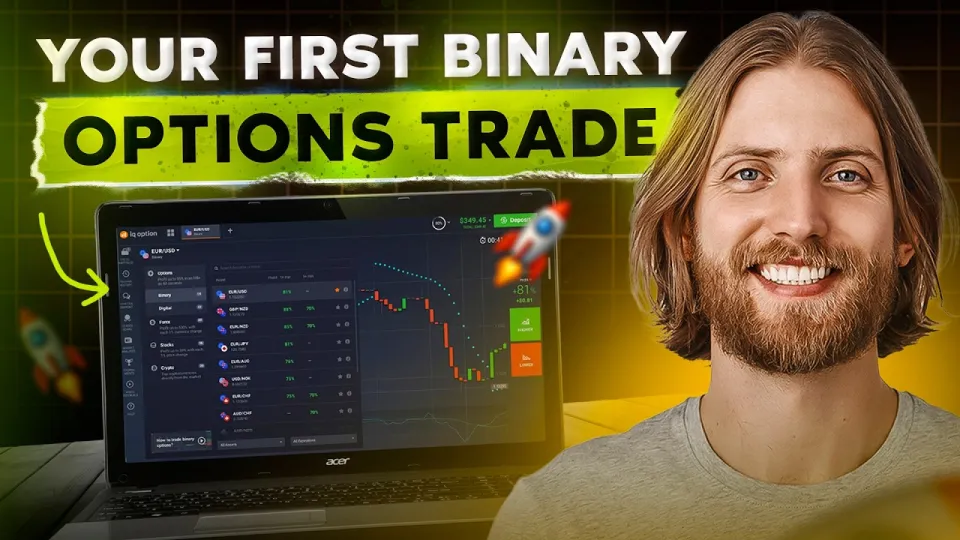
Video: Binary Options | Binary Options Tutorial for Beginners | Where Should You Start?
· based on the channel Binary options tutorial for beginners
Key takeaways
- A binary option pays a fixed amount if the price finishes above or below the strike at expiry; the trade is all-or-nothing.
- A typical payout of 80% against a 100% loss means one losing trade wipes out the profit of four winners.
- Quotex, Pocket Option and Binarium are the three platforms named in the video description as starting points.
- Short expiries of 1–5 minutes are driven by noise, so beginners should start with 5–15 minute contracts on major pairs.
- Risking 1–2% of the account per trade keeps a 10-loss streak survivable.
Binary options are fixed-time contracts where you predict only the direction of an asset: if the price finishes on the right side of the strike at expiry you receive a fixed payout, and if it does not you lose the stake. For a beginner the practical starting point is a demo account on a regulated-in-your-jurisdiction platform such as Quotex registration, a stake of 1–2% of the balance per trade, and expiries of 5–15 minutes on one liquid pair rather than one-minute bets.
The video breakdown from the channel Binary options tutorial for beginners follows the same logic: it is aimed at people asking where to start, and its description points to Quotex, Pocket Option and Binarium as the platforms to look at first.
How a binary option actually works
A binary option is a contract with only two outcomes, which is why it is called binary. You choose an asset (EUR/USD, gold, Bitcoin), an expiry time and a direction. If you buy a call, the option finishes in the money when the price at expiry is above the entry level; a put finishes in the money when the price is below it. Some platforms also offer a small refund on out-of-the-money trades, but it is usually a fraction of the stake.
The payout is quoted as a percentage before you click. A common figure is 70–90% on major currency pairs, and it can be lower on volatile assets or very short expiries. That percentage is not a profit forecast; it is the price the platform pays for taking the other side of your bet. Everything else in binary trading is a consequence of this fixed payoff structure.
The payout math that decides whether you can win
Because the loss is always the full stake, the win rate you need is higher than most beginners assume. With an 80% payout, a win brings +0.8 of the stake and a loss takes −1.0, so you need roughly 56% accuracy just to break even: 0.56 × 0.8 = 0.448 against 0.44 lost on the other 44% of trades. At a 70% payout the break-even rate rises to about 59%; at 90% it falls to about 53%.
This is the single most useful number in binary options for beginners. A strategy that wins six trades out of ten sounds strong, but at a 75% payout it earns almost nothing after costs. Before testing any signal or indicator setup, write down the payout the platform offers on the asset and expiry you intend to use, then check whether your historical win rate clears the break-even line with a margin.
Choosing a platform: Quotex, Pocket Option and Binarium
The three names in the video description cover most of what a beginner needs to compare. Quotex is known for a simple interface, a demo account and a wide list of currency pairs and crypto assets. Pocket Option offers a similar contract range plus social trading features and a mobile app. Binarium is oriented toward a European audience with a broad asset list and educational material.
When you compare binary options platforms, check four things before depositing: the minimum stake (often $1–$10), the payout on the asset you actually want to trade, the withdrawal methods and their processing times, and whether a demo account is available without a deposit. Regulation matters too, because rules differ by country and some platforms are not available to residents of certain jurisdictions. Test the same trade idea on demo for at least two weeks before risking real money.
A realistic first-week plan for a new trader
Start with one asset and one expiry length, and do not change either until you have data. EUR/USD with a 5- or 15-minute expiry is a reasonable default because liquidity is high and spreads are tight. Learn one chart-reading tool — support and resistance levels are enough — and ignore indicator stacking for now.
- Open a demo account and record 50 trades with a fixed stake and fixed expiry.
- Log the entry reason, the result and the payout for each trade in a spreadsheet.
- Calculate the win rate and compare it with the break-even rate for that payout.
- Only if the win rate is clearly above break-even, move to a live account with a small deposit.
- Cap daily losses at 5% of the balance and stop trading for the day when you hit it.
The purpose of the exercise is not to prove you can predict the market; it is to find out whether your edge survives the payout structure. Most beginners discover it does not, and that is a cheap lesson on demo.
Risk rules that keep a beginner in the game
Position sizing matters more in binary options than in spot trading, because every loss is 100% of the amount at risk. Risking 1–2% of the account per contract means a streak of ten losses costs 10–20% of the balance, which is recoverable; risking 10% per trade means the same streak halves the account. A stop-loss order does not exist inside a binary contract, so the stake itself is the only risk control you have.
Avoid martingale doubling after a loss. It converts a normal losing streak into a wiped account, and it is the most common reason beginners blow up within weeks. Also avoid trading around major news releases such as central bank decisions and US payrolls unless you understand how spreads and volatility behave, and never trade money you need for expenses.
Typical beginner questions and doubts
Most questions from new viewers of the channel come down to three worries: whether binary options are a scam, whether a small deposit is enough, and how long it takes to become consistent. On the first point, the contract type itself is legitimate and offered in various regulatory frameworks, but the industry has a long history of unregulated brokers, so platform due diligence is the real protection. On the second, a $50–$100 deposit is workable only with minimum stakes and strict 1–2% sizing; it will not produce meaningful income. On the third, expect months of demo and small-live practice, not days.
Another frequent doubt is whether a paid signal group or a "manual" can replace practice. No signal provider publishes a verified long-run win rate against the payout, and a strategy that works for someone else's stake size and expiry may not fit yours. Treat any course or signal service as optional and test the claims on demo first.
All platforms and tools mentioned in the video
- Quotex: https://dakaklik.com/_quotex?creative_id=WzzpYsjS3ps
- Pocket Option: https://dakaklik.com/_PocketOption?creative_id=WzzpYsjS3ps
- Binarium: https://dakaklik.com/_Binarium?creative_id=WzzpYsjS3ps
- NordVPN: https://dakatop.link/Nord_us?creative_id=WzzpYsjS3ps
Summary
Binary options reward accuracy, not activity: with payouts around 80% you need a win rate above roughly 56% before any profit exists, and that number should drive every decision you make. Start on demo with one asset and a fixed expiry, log at least 50 trades, and only go live once your win rate clears the break-even line with room to spare. Keep stakes at 1–2% of the balance, skip martingale, and verify the platform's payout, withdrawal terms and availability in your country before depositing. The channel Binary options tutorial for beginners covers this starting path in its video breakdown; if you want to begin with the platform it lists first, open a Quotex account here and run the demo before risking anything.
Questions & answers
Is binary options trading a scam?
The contract format is a legitimate instrument, but the industry includes many unregulated brokers, and that is where most complaints come from. Check licensing, withdrawal terms and availability in your jurisdiction, and test the platform on demo before depositing. No platform or signal service can guarantee profits.
How much money do I need to start binary options trading?
Platforms typically allow minimum stakes of $1–$10, so a $50–$100 deposit is enough to practice with real money if you keep each trade at 1–2% of the balance. That size will not generate meaningful income; it exists to build discipline and collect data on your win rate.
What win rate do I need to be profitable?
With an 80% payout you need roughly 56% winning trades just to break even, because a loss costs the full stake while a win returns only 0.8 of it. At a 70% payout the break-even rate is about 59%, and at 90% it drops to around 53%.
Which expiry time should a beginner choose?
Start with 5- to 15-minute expiries on a liquid asset such as EUR/USD, where price moves reflect real order flow rather than noise. One-minute contracts are dominated by random ticks and make consistent results much harder to achieve.
Source: Binary Options | Binary Options Tutorial for Beginners | Where Should You Start? · Markdown version